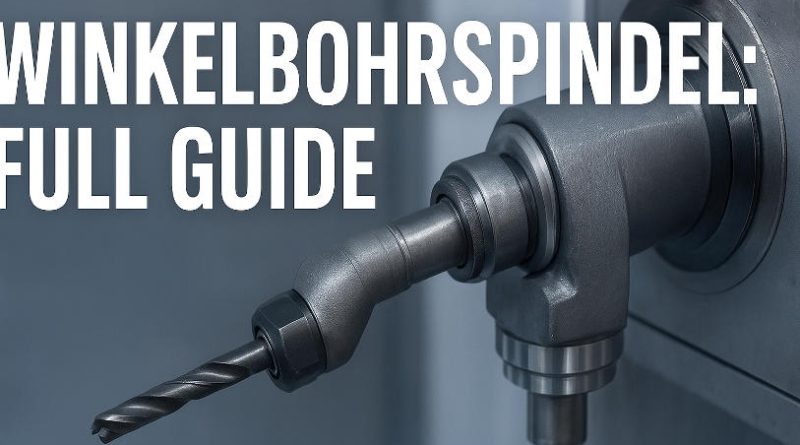
Winkelbohrspindel: Full Guide to Uses, Function, Types & Industrial Benefits
In modern manufacturing, precision tools and specialized drilling components play a crucial role in increasing productivity and ensuring accuracy. One such essential tool used across machining, metalworking, and industrial production is the Winkelbohrspindel. This unique angled drilling spindle allows technicians and engineers to perform drilling operations in areas that are otherwise difficult or impossible to reach with traditional straight spindles.
Whether you work with CNC machines, automated production lines, or advanced mechanical systems, understanding what a Winkelbohrspindel is and how it functions can greatly improve efficiency. This guide covers its structure, applications, advantages, installation tips, and important safety considerations.
What Is a Winkelbohrspindel?
A Winkelbohrspindel, also called an angled drilling spindle or angle drill spindle, is a specialized tool attachment that redirects rotational power at an angle—usually 90 degrees—to allow drilling in tight or restricted spaces.
Instead of drilling straight along the tool axis, the spindle transfers torque through a geared mechanism, enabling precision drilling at specific angles.
This makes the tool ideal for:
- Hard-to-reach areas
- Tight machine housings
- Deep cavities
- Side-angle drilling
- Components with limited access
Manufacturers rely on Winkelbohrspindeln when conventional spindles cannot physically reach the drilling position.
How a Winkelbohrspindel Works
The primary function of this spindle is to redirect rotational energy. Inside the unit, a durable gear mechanism—usually a bevel gear set—transfers the rotation from the motor or main spindle into a new direction.
Key components include:
- Input shaft: Connects to the machine spindle or motor
- Bevel gears: Redirect rotation at 90° or other designed angles
- Output spindle: Holds the tool (drill bit, cutter, etc.)
- Heavy-duty housing: Ensures stability and vibration resistance
The high-precision gearing ensures minimal power loss, allowing operators to drill accurately even in highly confined spaces.
Where Winkelbohrspindeln Are Used
These angle spindles are common across multiple industries, particularly where complex components require drilling from non-standard angles.
Common applications include:
1. CNC Machining
CNC machines often require angled drilling for:
- Engine blocks
- Gear housings
- Aluminum profiles
- Aerospace components
- Mechanical parts with internal cavities
2. Automotive Industry
Winkelbohrspindeln are widely used for:
- Drilling inside engine compartments
- Producing gearboxes
- Manufacturing precision automotive parts
- Working on metal body components
3. Aerospace & Aviation
Aircraft components often have restricted geometries, requiring angled drilling tools to create precise holes for rivets, fasteners, and structural assemblies.
4. Industrial Maintenance & Repairs
Technicians use these spindles to access deep or obstructed areas during equipment maintenance.
5. Metalworking & Fabrication
When the drilling direction cannot be straight due to design limitations, angled spindles provide the flexibility needed.
Types of Winkelbohrspindeln
Different variations exist based on angle, power rating, size, and application.
1. 90-Degree Angle Spindle
The most common type, ideal for perpendicular drilling.
2. Adjustable Angle Spindle
Allows angle adjustments for custom drilling positions.
3. High-Speed Spindles
Designed for small-diameter holes requiring high RPM.
4. Heavy-Torque Spindles
Used for larger holes or tough materials like steel or titanium.
5. Compact Micro Spindles
Perfect for miniature parts such as electronics or medical devices.
Benefits of Using a Winkelbohrspindel
1. Access to Difficult Areas
Allows drilling where conventional tools simply cannot reach.
2. Improved Efficiency
Reduces setup disruptions and increases workflow speed.
3. High Precision
The internal gears maintain tight tolerances essential for industrial applications.
4. Versatile Applications
Suitable for CNC machines, robotic arms, manual drilling systems, and automatic production lines.
5. Reduced Machine Downtime
Instead of repositioning the entire workpiece, the angled spindle allows drilling directly from the required orientation.
6. Cost-Effective
Helps avoid expensive fixture designs or machine modifications.
How to Install a Winkelbohrspindel
Although installation depends on machine type, the general procedure includes:
1. Clean the Spindle Interface
Remove dust, oil, or debris to ensure a secure connection.
2. Mount the Angle Spindle
Attach the device to the machine spindle or motor shaft.
3. Secure the Locking Mechanism
Most models include mechanical locks to prevent rotation and increase stability.
4. Test Rotation
Run a slow-speed test to check:
- Gear alignment
- Vibration levels
- Smooth torque transfer
5. Attach the Drill Bit
Insert the appropriate tool, ensuring correct tightening.
Safety Tips When Using a Winkelbohrspindel
Industrial tools require careful handling.
Follow these best practices:
- Always confirm proper alignment before operation
- Avoid excessive force or pressure during drilling
- Use correct lubrication for internal gears
- Inspect for wear, damage, or overheating
- Do not exceed manufacturer RPM limits
- Wear appropriate PPE: gloves, goggles, and ear protection
Proper maintenance dramatically extends the lifespan of angle spindles.
How to Choose the Right Winkelbohrspindel
When selecting the best model, consider:
- Angle requirement (90°, adjustable, or custom)
- Speed and torque specifications
- Material of the workpiece
- Type of machine (CNC, milling machine, robot arm)
- Size and weight limitations
- Durability and gear quality
For heavy industrial use, always choose spindles with hardened steel gears and reinforced housings.
Conclusion
A Winkelbohrspindel is a powerful and versatile tool that dramatically improves drilling capabilities in restricted or complex areas. Whether used in CNC machining, automotive production, aerospace engineering, or industrial maintenance, these angled spindles ensure precision, efficiency, and operational flexibility. With the right selection, installation, and maintenance, a Winkelbohrspindel can significantly enhance your manufacturing workflow and provide long-term value.